Friday, Jan 23, 2026 | 03 Shaban 1447

Friday, Jan 23, 2026 | 03 Shaban 1447
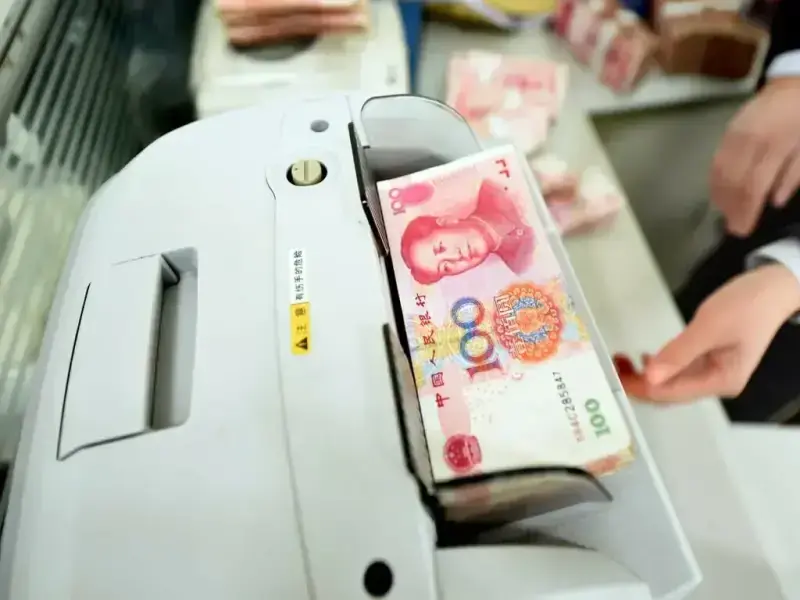
Pakistan is set to enter the Chinese capital market for the first time with the issuance of a Panda bond, structured as a green bond, by the end of this month, reflecting the country’s commitment to sustainable and climate-resilient financing, Federal Minister for Finance Muhammad Aurangzeb said on the sidelines of the World Economic Forum (WEF) in Davos.
“For the first time, we are going to do an inaugural Panda bond by the end of this month, and it’s all in the context of sustainable finance. As a country, we are one of the most vulnerable climate financing countries.
“So this is going to be a green bond which is going to help us,” he said, while speaking at a high-level panel discussion on “How Can We Unlock New Sources of Growth? – Weight of Global Debt” held on the sidelines of the WEF.
Pakistan targets $250 million for inaugural Panda bond, launch expected in January
A Panda bond is a Renminbi (RMB)-denominated bond issued by a non-Chinese entity, like a foreign company or government, within mainland China’s domestic market, offering them access to China’s investor base and supporting RMB internationalisation.
Aurangzeb underscored the importance of fiscal discipline, productive use of debt and export-led growth as key pathways to unlocking new sources of economic growth, while
Presenting an emerging markets perspective, the finance minister emphasised that debt, in itself, is not inherently negative, provided it is deployed productively.
He noted that for countries like Pakistan, debt must be directed toward investments that generate exportable surplus rather than consumption, enabling sustainable repayment and long-term growth.
He highlighted that emerging economies do not have the privilege of reserve currencies and therefore must ensure market efficiency, prudent borrowing and careful management of foreign exchange risks.
The minister stressed that unsustainable debt trajectories are fundamentally a consequence of weak fiscal discipline. He shared that Pakistan has made significant progress by reducing its debt-to-GDP ratio from 75% to 70%, achieving a primary surplus and restoring fiscal balance through responsible economic management.
He added that inflation in Pakistan has declined sharply from a peak of 38% to single digits, while the policy rate has been reduced from over 22% to 10.5%, placing the country on the ‘right side’ of the interest rate cycle.
Addressing the issue of climate change, the minister stated that for Pakistan and other vulnerable emerging economies, climate risks are real, recurring and economically disruptive. He noted that building fiscal buffers has enabled Pakistan to respond to recent floods through domestic resources rather than international emergency appeals, underscoring the importance of fiscal resilience in the face of exogenous shocks.
He further highlighted the role of public-private partnerships and capital markets in financing adaptation and development projects, citing the successful closure of Pakistan’s largest-ever syndicated financing of approximately $3.6 billion for a major copper mining project.
The project, he noted, is expected to generate around $2.8 billion in exports annually from 2028, significantly strengthening Pakistan’s export base and supporting global energy transition needs.
Responding to a question from the audience on technology funding and the new economy, Aurangzeb emphasised Pakistan’s strong potential in IT, freelancing and digital services, noting recent growth in IT exports and ongoing investments in skills development, blockchain and emerging technologies.
He reiterated that access to funding is not the core challenge; rather, capacity building, prioritisation and effective execution are critical to translating opportunities into sustainable growth.