Thursday, Feb 19, 2026 | 01 Ramadan 1447
Thursday, Feb 19, 2026 | 01 Ramadan 1447
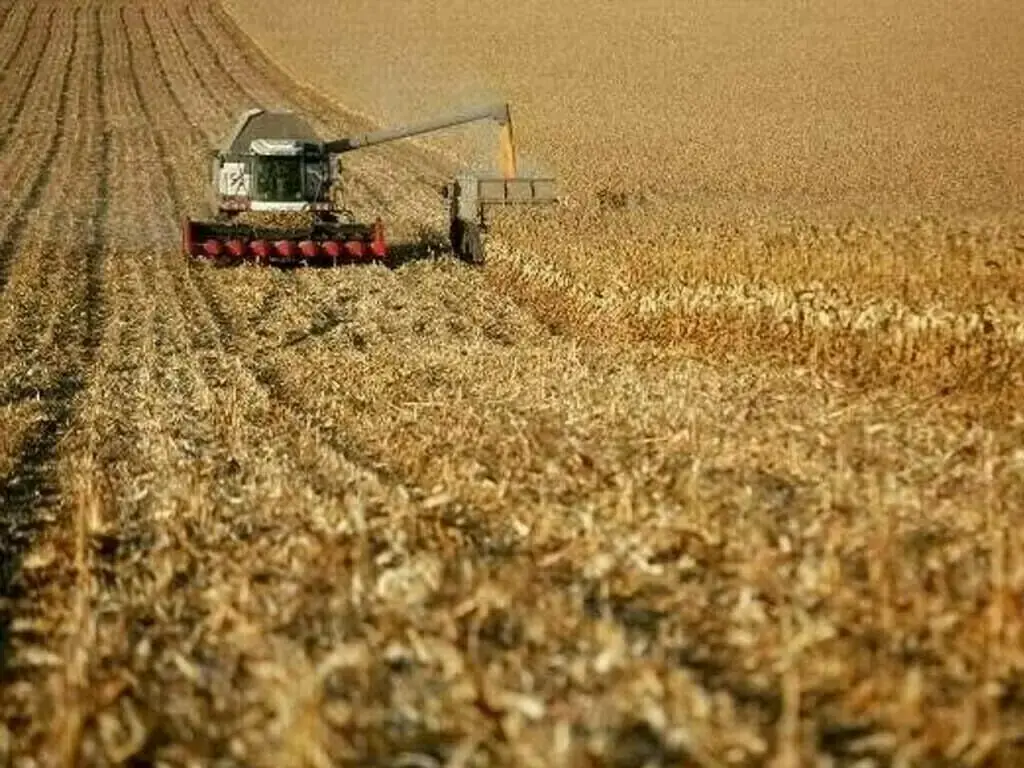
Pakistan keeps misdiagnosing the agricultural credit problem. It is framed as a pricing question, a morality play about “usury,” or a technocratic challenge of “financial inclusion.” None of these framings explains the persistence of the status quo, or the repeated failure of formal finance to replace it. The issue is institutional fit. Agriculture is a seasonal, probabilistic, price-discovered-at-harvest activity, exposed to shocks that are often systemic rather than borrower-specific. The first-principle question is therefore not whether credit is expensive. It is whether banks are even the right intermediary for this kind of financing.
The durability of the arthi model is often treated as evidence of farmer irrationality or rural backwardness. That is both convenient and wrong. The arthi persists because his contract matches the operating reality of the farm economy. He advances liquidity without formal collateral, tolerates repayment volatility, rolls stress across seasons, and does not require enforcement that the system cannot deliver. In a setting where yields are uncertain, prices are discovered only at harvest, and one adverse crop cycle can permanently exclude a borrower from formal credit, this flexibility has real economic value. The arthi survives not because he is cheap, but because he is structurally aligned with risk.
Banks are not, and that is not an insult to bankers. It is a description of what a regulated balance sheet is designed to do. Bank lending assumes predictable cash flows, standardized underwriting, enforceable security, and rule-based collections. It can tolerate volatility only if the volatility can be priced, collateralized, or transferred. Pakistani agriculture routinely defeats all three. When stress appears, banks respond exactly as they are designed to respond: tighten underwriting, demand stronger security, shorten tenors, and harden collections. In doing so they reproduce the very exclusion that policy interventions claim to solve. The system then labels this prudence and moves on.
This mismatch explains why Pakistan’s agricultural finance agenda keeps cycling through the same tools and the same disappointments. Whenever the state wants banks to lend, it reaches for targets, concessional liquidity, refinance lines, subsidies, and guarantees. But these are patches on a deeper design flaw. Liquidity does not solve a cash-flow structure problem. Targets do not solve an observability problem. Subsidies do not solve a settlement problem. Guarantees can shift loss, but they alone also cannot rewrite the underlying contract. If the instrument remains a bank loan that must behave like an urban SME loan, the outcome will remain the same: either rationing, or recurrent defaults followed by retreat.
It is tempting, at this point, to conclude that the arthi is the inevitable alternative. That is also a mistake. The critique of the arthi should not be moralistic, it should be structural. The arthi is not merely an informal lender. He is simultaneously the creditor and the buyer. That integration is what makes his liquidity provision viable, yet also makes the system economically distortionary. When settlement is tied to harvest sale and the buyer controls the terms, the grower faces a bilateral monopoly at the moment of maximum vulnerability. One one hand, quality carries little reward, on the other price discovery is also constrained. Incremental effort rarely earns a premium. The farmer receives liquidity insurance, but pays for it through suppressed realization and a long-run trap of low productivity.
So, Pakistan is left with an uncomfortable truth. The dominant intermediaries are both poorfits, but for different reasons. Banks are too rigid to finance farm volatility at scale without collateral and enforceability. Aarthis are too conflicted to allow farm incomes to rise through quality differentiation and competitive price discovery. One excludes, while the other first includes, then extracts. This is why reforms oscillate between fetishizing formal credit and demonizing the informal intermediary, while the underlying equilibrium remains intact.
If banks are not the right medium, and the arthi is not a developmental solution, then the alternative is not a cleaner version of either. It is a different intermediary altogether. Agriculture does not primarily need a financial intermediary. It needs an operating intermediary, a structure that can carry seasonal exposure, observe production closely, and settle through the crop cycle, without holding monopoly power over pricing. The label is less important than the capabilities.
The first requirement is seasonality-aligned finance. Exposure must expand with the crop cycle and contract at harvest, without converting delayed sale or a weak season into a delinquency event that permanently destroys future access. The second requirement is proximity, not in the romantic sense of “relationships,” but in the functional sense of observability. Agriculture is a data-poor economy. The only scalable substitute for collateral is knowledge, produced through repeat transactions, services delivered in-kind, and verifiable production and sale. Banks cannot generate this cheaply. Aarthis generate it through control. A modern system must generate it through an operating relationship that improves outcomes rather than monetizing dependence.
The third requirement is separation of finance from monopsony. The farmer cannot be financed by the same actor who unilaterally determines the realized price. Any credible alternative must preserve price discovery and allow the farmer to access competitive markets. Aggregation, grading, logistics, and market linkage can be provided, but pricing power must not be embedded inside the credit relationship. That is the core institutional correction. The fourth requirement is tolerance for volatility without criminalizing it. Defaults in agriculture often reflect shocks rather than intent. Any institution that responds by blacklisting farmers after one bad cycle will simply reproduce bank exclusion under a different banner.
Once the problem is stated this way, the policy implications change. The question stops being how to force banks into agricultural lending. It becomes how to enable a layer of operating intermediaries that can intermediate risk, observability, and settlement while keeping price discovery competitive. The state’s role becomes narrower and more realistic: not command-and-control over bank portfolios, but enabling conditions for contract forms and market structures that can actually function in a seasonal economy. Risk-sharing, where it is justified, should be reserved for systemic shocks, not used as a permanent crutch to subsidize a misfit lending model.
The arthi will not be displaced by sermons about exploitation, and banks will not become rural development institutions through targets and concessional liquidity. The arthi will be displaced when a competing system can offer what he offers, without what he imposes. That requires abandoning the fiction that agriculture primarily needs cheaper loans. It needs a different intermediary, and therefore a different contract. Until that shift occurs, Pakistan will keep mistaking an institutional mismatch for a pricing dispute, and keep recycling interventions that treat farm finance as a banking problem when it is, in fact, a market-structure problem.