Sunday, Jan 11, 2026 | 21 Rajab 1447

Sunday, Jan 11, 2026 | 21 Rajab 1447
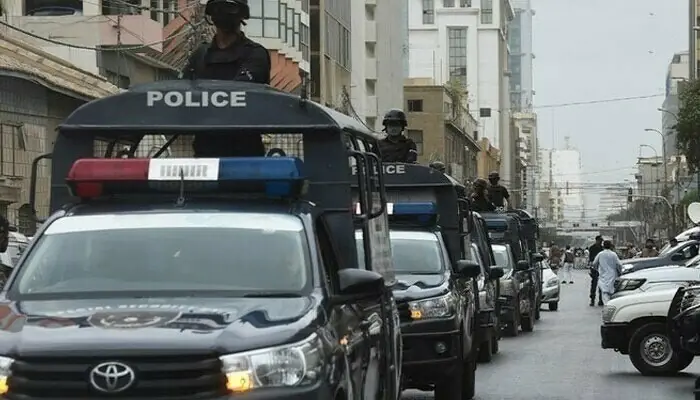
EDITORIAL: The foiled terror plot in Karachi this week brings into sharp focus the scale of the danger the city narrowly escaped. Nearly two tonnes of explosive material were assembled into a vehicle-borne device and positioned inside Pakistan’s largest urban centre, pointing to an operation designed for mass casualties and maximum disruption.
The interception of this plot deserves unqualified credit. It also calls for a clear-eyed assessment of the threat environment Pakistan is once again facing, particularly in its most economically and strategically critical city.
The intelligence-led operation that disrupted the plot underlines the value of coordination across agencies. Counter-terrorism today is not won by isolated successes or reactive policing. It is, in fact, built on shared intelligence, patient surveillance, financial tracking and the ability to act quietly before panic is triggered.
In this case, information flowed early enough for law enforcement agencies to identify safe houses, trace supply chains and intercept explosive material before it reached its intended target. That outcome did not happen by chance. It reflects institutional learning drawn from past experiences, when fragmented responses allowed militants to exploit gaps between jurisdictions and mandates.
The nature of the plot itself is equally instructive. Vehicle-borne improvised explosive devices are not easy to assemble or transport, particularly into a densely populated, heavily policed city. Their use signals ambition and a willingness to absorb logistical risk for maximum impact.
The comparison being drawn with earlier attacks, including the 2008 Marriott bombing in Islamabad, is not alarmist. It is a reminder of how quickly urban terrorism can escalate when such devices succeed. The difference this time is that the attack never reached execution. That distinction matters.
There is, however, a darker inference. For several years, militant violence had shifted away from large-scale civilian targets in major cities, focusing instead on security forces, border posts and isolated infrastructure. The foiled Karachi plot suggests a recalibration back towards soft targets and urban populations. That shift carries strategic intent.
Civilian attacks generate fear, undermine confidence in the state and attract international attention. For groups under pressure in peripheral regions, cities offer visibility and psychological leverage. Karachi, in particular, magnifies that effect.
This is not just because of its population size. Karachi is the country’s principal port, its financial centre and its most important commercial hub. Disruptions here ripple through the national economy.
A successful mass-casualty attack would not only have cost lives; it would have damaged investor confidence, disrupted logistics and deepened the perception of systemic insecurity. Militants understand this arithmetic. That is precisely why the city remains a high-value target despite years of security operations.
The response, therefore, cannot end with congratulating agencies for a job well done, however deserved that praise may be. Crushing this threat requires pressure at multiple levels. Operationally, intelligence-based policing must remain relentless, particularly against sleeper cells, local facilitators and the financial incentives that enable logistics.
The investigation has already highlighted how small payments and weak oversight can turn ordinary neighbourhoods into staging grounds for terror. That vulnerability must be addressed through stricter tenancy regulation, monitoring of chemical inputs and enforcement against illicit supply chains.
At the strategic level, vigilance must extend beyond the city. Explosives do not materialise in isolation. They move through routes, networks and borders. Breaking those arteries requires sustained cooperation between civilian law enforcement, intelligence agencies and, where necessary, military assets. It also requires political consistency. Counter-terrorism efforts lose effectiveness when messaging wavers or when accountability becomes selective.
Importantly, this episode reveals two parallel truths. First, militant groups retain the intent and capability to inflict catastrophic harm if given space. Second, Pakistan’s security apparatus, when coordinated and proactive, can deny them that space. The challenge now is to ensure that this success becomes routine rather than exceptional.
The authorities deserve credit for preventing what could have been one of the deadliest attacks in the city’s history. They also deserve the support required to sustain pressure on networks that have not disappeared, only adapted. Pakistan cannot afford a return to the years when terror dictated daily life. The warning has been delivered without bloodshed. It must not be ignored.
Copyright Business Recorder, 2026