Friday, Dec 26, 2025 | 05 Rajab 1447

Friday, Dec 26, 2025 | 05 Rajab 1447
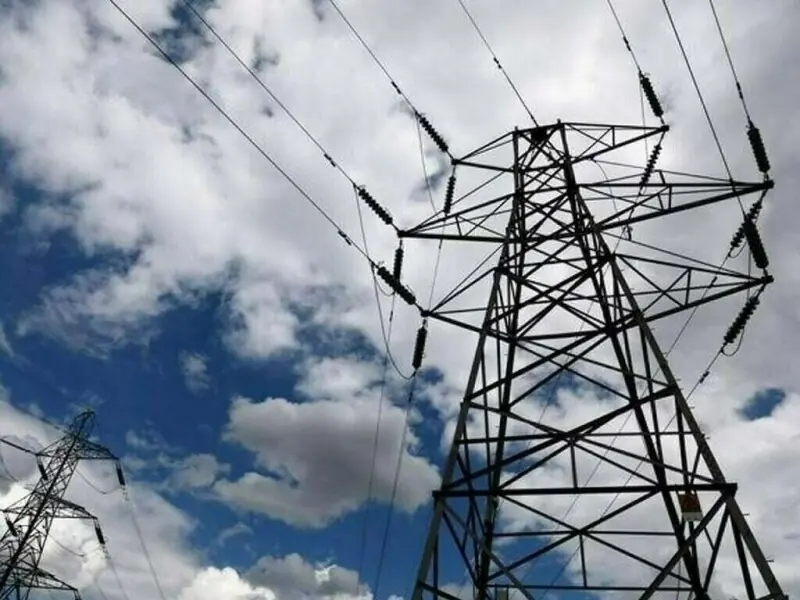
Pakistan’s power sector has been at the crossroads for a while, facing an array of challenges, and grappling with a mix of financial, operational as well as policy issues. Escalating capacity payments only add to the worries.
Addressing these issues will require comprehensive reforms, investment in infrastructure, improved governance, and a shift toward an investor-friendly regime, especially when it comes to the power sector.
In this context, the introduction of the Competitive Trading Bilateral Contracts Market (CTBCM) offers a potential solution but also raises countless concerns about its implications for consumers at large and financial sustainability of the sector. Unnecessary rigid regulations like barring DISCOs from competitive markets also hits the government’s plan for DISCOs’ privatisation. There is a prevalence of unique challenges that need to be addressed to ensure its fair participation in the CTBCM framework.
Some experts argue that over 10 international markets have been studied with lessons implemented for CTBCM’s implementation in Pakistan which is two months down the line. However, what’s lacking is studying the local power sector to understand the ailments and their treatment. While it is said that all stakeholders were consulted, some industrialists argue otherwise, despite representing one of the lucrative customer groups. However, no report/analysis is available which states in quantified terms what this new market wants to achieve and how it will impact consumer tariff. Do they plan to increase growth by X % or reduce tariff by Y%? How will CTBCM success be gauged – through just by symbolic milestones such as ribbon cutting or through facilitating some transactions at the cost of increase in regulated consumer tariff?
Starting with the concept of Suppliers of Last Resort (SOLR) being applicable to power utilities while they cannot compete in the market, it can easily be contested that such restrictions will hinder competition and undermine the very essence of privatisation. Potentially the new investors interested in privatisation of DISCOs would be wary of the fact that they can never compete in the competitive market space of Pakistan’s power sector. Companies that already manage the distribution network and serve as SOLR can bring more options for consumers when they are allowed to participate as competitive suppliers. This will help increase the sale price as seen in Brazil.
Then comes the question of stranded costs arising from market liberalisation and these are even fair. These costs refer to the financial burdens or losses that certain market participants, particularly power producers and utilities, may face as a result of the transition from a regulated electricity market to a competitive one. A fair mechanism is of utmost importance to ensure cost recovery without unfairly burdening regulated consumers. It is not clear as to what would constitute wheeling charges, holistically suggested at Rs12.5 per unit. Currently the stranded capacity cost of Rs17.5 will appear as a disincentive to bulk consumers who may leave the grid just like how the journey of net metering was sketched leaving capacity payments to be borne by the remaining customers.
During a public hearing by NEPRA, Abid Latif Lodhi, the Managing Director of the Power Planning and Monitoring Company (PPMC), explained that the approach being discussed for the CTBCM is similar to net metering, where costs are distributed across a pool of consumers. The government has announced a framework that will allocate 800 MW of wheeling demand to industrial and bulk consumers, allowing them to procure power directly at competitive prices. It would enable the installation of approximately 4,000 MW of new solar generation capacity. A high-level analysis suggests that around Rs100 billion in capacity costs will be transferred to this pool of consumers.
While the Power Ministry is amending net metering to reduce the burden on consumers, the decision to impose new costs through changes in the open market regulations indicates that no comprehensive assessment has been presented to decision-makers. Although the government has reassured that no subsidies will be required to meet IMF commitments, little consideration has been given to the significant financial burden imposed on consumers, particularly in other sectors.
Industrial consumers have urged the government to conduct a holistic review of these policies, emphasising that small and medium-sized enterprises (SMEs) could face undue disadvantages. The current approach favours large industries while placing an unfair burden on regulated consumer groups.
The CTBCM model holds great potential to address challenges of Pakistan’s power sector, but its success will depend on the careful consideration of the unique challenges faced by utilities, especially those which are expected to be privatised soon. By implementing tailored reforms, Pakistan can create a fair and transparent market that benefits all stakeholders; public and private alike, while improving the sector’s efficiency, financial sustainability, and consumer affordability. The integration of private sector DISCO participants as competitive supplier into the CTBCM framework is essential for creating a competitive, transparent, and sustainable power market in Pakistan while giving a green signal to potential investors eyeing the power sector. This should not be another reason for discouraging private investment in the distribution leg of Pakistan’s power sector.