Monday, Feb 09, 2026 | 20 Shaban 1447

Monday, Feb 09, 2026 | 20 Shaban 1447
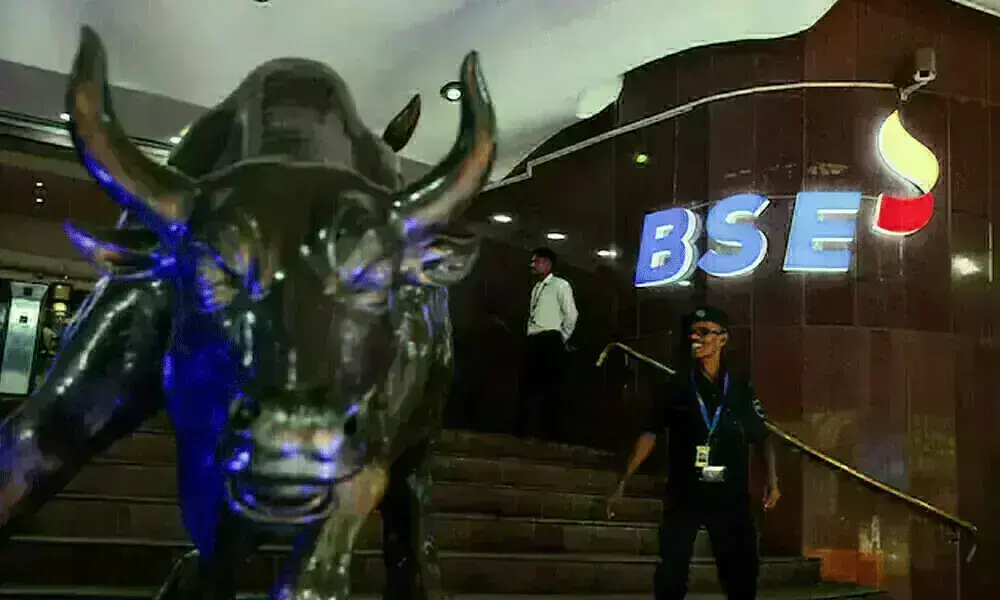
Indian shares were muted in a special trading session ahead of the federal budget on Sunday, with investors awaiting support for growth from government capital spending and relief for export-oriented sectors hit by US tariffs.
The Nifty 50 shed 0.08% to 25,301. 65, while the BSE Sensex added 0.01% to 82,274.19 as of 9:33 a.m. IST. The debt and foreign exchange markets are shut.
“Trading on budget day requires extreme caution because it is historically one of the most volatile days in the year for Indian markets,” said Santosh Meena, head of research at Swastika Investmart. “Since it’s a Sunday, the market dynamics are unique, institutional investors who typically provide the necessary liquidity and stability may remain largely absent or inactive,” Meena said.
Finance Minister Nirmala Sitharaman will present the 2026–27 budget at 11 a.m. IST.
The benchmark Nifty 50 has gained 7.8% since the last budget, but has underperformed emerging markets and Asian peers amid record foreign outflows and muted corporate earnings.
Policy measures since the last budget — GST cuts, interest rate reductions and liquidity easing — have improved the outlook for domestic earnings and consumption demand.
“Investors are not expecting headline surprises, but are focused on continuity in government capex, fiscal discipline and execution clarity,” said Rajesh Singla, chief executive and fund manager at Alpha AIF.
Nine of the 16 major sectors logged losses.
The metal index dropped 4.4%, tracking a drop in global metal prices on a stronger dollar and profit-taking after a recent rally.
The main trigger was US President Donald Trump’s nomination of Kevin Warsh as the next Federal Reserve Chair, said two analysts.
Warsh is seen as hawk on inflation and strongly committed to the Fed’s independence, which led investors to reassess interest rate expectations and pushed the dollar higher.
Defence stocks jumped 1.4% on expectations of higher defence spending from the government to accelerate the push for local manufacturing.
The broader domestic small-caps and mid-caps were down 1.8% and 0.6%, respectively.