Saturday, Jan 24, 2026 | 04 Shaban 1447

Saturday, Jan 24, 2026 | 04 Shaban 1447
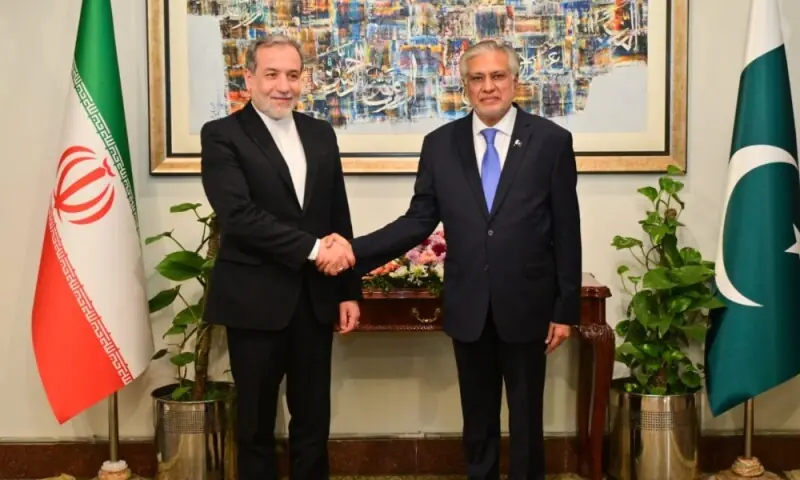
Iranian Foreign Minister Seyed Abbas Araghchi on Saturday thanked Deputy Prime Minister and Foreign Minister Ishaq Dar for his strong support and Pakistan’s position at the United Nations Human Rights Council (UNHRC) in Geneva, including its call for a vote as well as voting against the resolution concerning Iran.
The Iranian foreign minister said this in a telephone call to DPM Dar. The two leaders exchanged views on current regional and international developments as well.
Meanwhile, in a post on his X account, Iranian Ambassador to Pakistan Reza Amiri Moghadam also expressed gratitude to Pakistan for extending historic and unwavering support to Iran at the UN Human Rights Council in Geneva.
In his post, he was appreciative of Pakistan for casting a negative vote against the unjustified resolution targeting Iran.
READ MORE: Pakistan, Iran vow deeper ties as DPM Dar meets Iranian security chief
“This principled stance marks the third consecutive defeat of unprovoked and politically motivated actions against Iran over the past year, including the unprovoked twelve-day aggression, recent foreign-backed riots aimed at destabilising the country, and the misuse of international organisations to pursue capricious and hostile agendas by certain members,” he said.
The Iranian ambassador said such steadfast support is a clear reflection of Pakistan’s enduring commitment to justice, multilateralism, respect for human rights and national sovereignty and will be remembered with deep appreciation.
During 39th Special Session of the UN Human Rights Council “to address the deteriorating human rights situation in the Islamic Republic of Iran”, Pakistani Counsellor Muneeb Ahmed said Pakistan will always be a friend to Iran and the Iranian people everywhere.
“Iran was the first country to recognise Pakistan’s Independence. Regardless of domestic or regional developments, the two peoples have always enjoyed strong bonds of friendship rooted in shared culture, history and faith,” he said.
Recent developments in Iran were, therefore, of great concern to Pakistan, the counselor said.
Pakistan, he said, welcomes the cessation of violence and the gradual return to normalcy in Iran. “We also note Iran’s commitment to uphold the due process of law,” he added.
Ahmed said the protests cannot be separated from the context of the tragic loss of life and destruction that the people of Iran suffered as the result of a regional aggressor’s unlawful military attacks last June. “Maintaining peace and stability remains the best safeguard for the human rights of people in Iran and across the region.
“This debate can also not overlook the adverse human rights impacts of unilateral sanctions as aggravating factors underlying the protests. The High Commissioner and Special Procedures have repeatedly warned that these measures affect the dignity and rights of all Iranians. They also constrain the Iranian government’s ability to uphold all human rights,” he maintained.
He also said sanctions, military action and interference have only caused suffering in Iran. The value of imposed mandates without the consent of Iran remains dubious, he added.