The Pakistani rupee posted marginal gain against the US dollar in the inter-bank market on Friday.
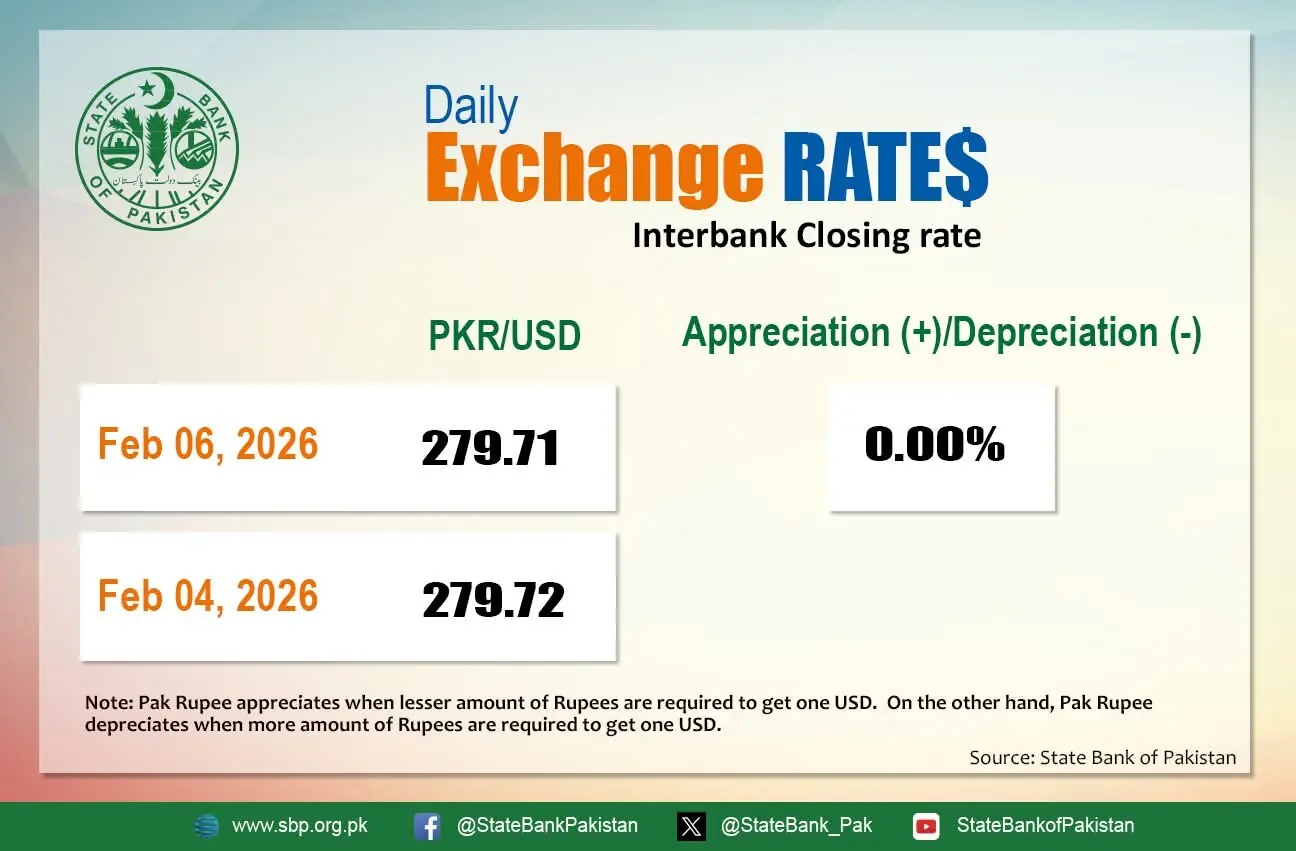
At close, the local currency settled at 279.71, a gain of Re0.01 against the greenback.
On Friday, the local unit closed at 279.72, according to the State Bank of Pakistan (SBP).
Internationally, the US dollar steadied near a two-week high on Friday, poised for its strongest weekly performance since November as a rout in stocks driven by AI-spending concerns rattled investors, while the yen firmed ahead of a national election on Sunday.
The dollar has strengthened since President Donald Trump nominated Kevin Warsh as the next Federal Reserve Chair last week as markets expect him not to push a lot for rate cuts, easing some worries about central bank independence.
The sharp sell-off in technology stocks this week comes as investors fret about the massive spending on artificial intelligence as well as the cascading impact of fast-advancing AI tools that could upend various sectors.
The risk aversion has helped the dollar despite US Treasury yields sliding after economic data pointed to a weaker-than-expected jobs market ahead of next week’s highly anticipated payrolls report for January.
The dollar index , which measures the US currency against six other units, was at 97.961, hovering near the highest since January 23.
The index is set for a 1% increase for the week, its steepest rise since the middle of November.
Oil prices, a key indicator of currency parity, held steady on Friday as investors awaited news from high-stakes talks between the United States and Iran that are taking place in Oman amid fears of another supply-disrupting Middle East conflict.
Brent crude futures rose 7 cents, or 0.1%, to $67.62 a barrel by 1055 GMT, while US West Texas Intermediate crude was also up 7 cents, or 0.1%, at $63.36 a barrel.
Still, Brent was set to end the week 4.3% down, as WTI was on track to end the week little changed.