Monday, Feb 16, 2026 | 27 Shaban 1447

Monday, Feb 16, 2026 | 27 Shaban 1447
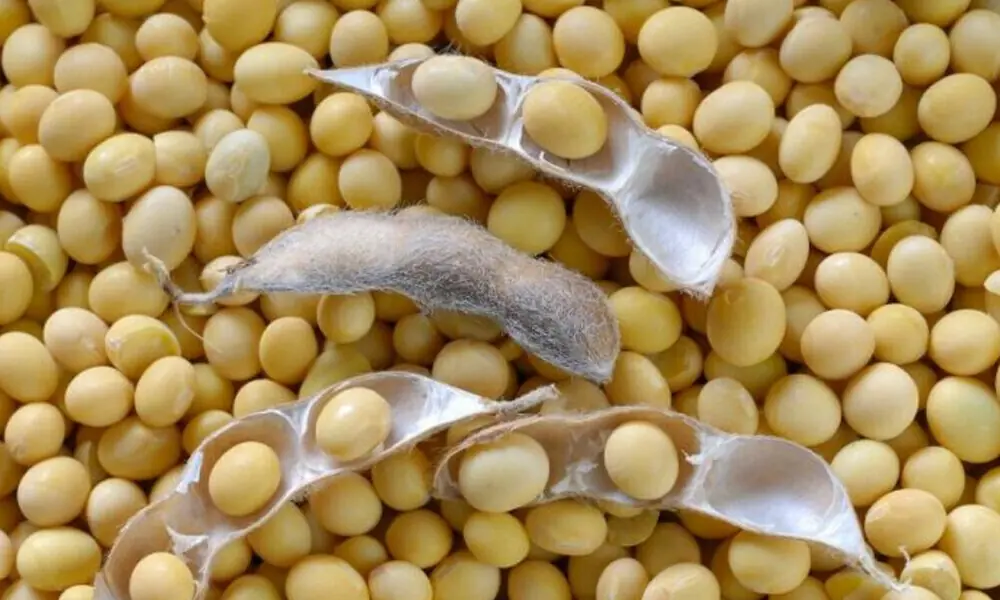
As global agricultural markets adjust to shifting trade flows, evolving sustainability scrutiny, and rising protein demand across emerging economies, US Soy continues to position itself as a scalable source of feed and food nutrition.
In recent years, Pakistan has re-emerged as an increasingly important destination within this broader landscape, particularly as the country’s poultry and livestock sectors expand and the edible oil import bill remains structurally large.
Scott Gaffner, from Greenville, Illinois, serves as Secretary of the US Soybean Export Council (USSEC) and is an At-Large Director of the Illinois Soybean Association (ISA), where he also serves on Market Development and Governance committees. He raises soybeans, corn and wheat on his family’s centennial farm, and represents ISA at the Soy Innovation Center while also serving on the executive committees of USSEC, the USA Poultry and Egg Export Council (USAPEEC) and the World Initiative for Soy in Human Health (WISHH).
Gaffner earned his bachelor’s degree in criminal justice through studies at Lincoln Christian University, Greenville University and Western Illinois University. He retired as a lieutenant after nearly 30 years of service with the Illinois State Police and has also operated several small businesses. He and his wife have two sons.
Jim Sutter serves as Chief Executive Officer of USSEC, the international marketing arm of US Soy. With a commercial background in global grains and oilseeds, including leadership roles within Cargill’s international business operations, he leads USSEC’s global strategy across more than 80 markets. USSEC works with its members across the soy value chain, including farmers, processors, logistics and commodity stakeholders, to differentiate US Soy, deepen local industry partnerships, and enable market access for human consumption, aquaculture, and livestock feed.
BR Research sat down with Scott Gaffner and Jim Sutter to discuss how farmers and industry are responding to global market shifts, how sustainability claims are substantiated, and how USSEC approaches market development and customer relationships, with particular reference to Pakistan. Following are edited excerpts of the conversation.
BR Research: How are farmers like yourself preparing for global shifts in the market over the next five to ten years? What challenges do you foresee?
Scott Gaffner: As a farmer, I am grateful that we have organisations that help diversify markets and build long-term relationships internationally. If we did not have organisations such as USSEC advocating on the international stage, it would be difficult for farmers to predict how markets may shift. One important lesson for us is the value of diversified demand. When a large buyer steps back, it reinforces why we need a diversified group of buyers internationally. We have seen other countries step forward and we want to see that demand broaden over time. From a farm planning perspective, we still make long-term decisions around equipment, cost structures, and crop rotations, but market diversification gives us more resilience.
BR Research: In global oilseeds commodities markets, prices do not necessarily revert to earlier lows even when large buying countries have stepped back. What explains the persistence of higher prices in your view?
Jim Sutter: Soy demand globally remains strong. Even when volumes shift between destinations, the underlying demand for protein and oil continues to support the market. We may not be selling as much to one destination at a particular moment, but we are selling more to a broader range of markets.
BR Research: Which markets are you most focused on for growth beyond the traditional large importers?
Jim Sutter: Pakistan and Bangladesh are both important markets for us and it is encouraging to see shipments to these destinations rising. We also see sustained growth in Southeast Asia, including Vietnam, the Philippines, Thailand and Indonesia. These markets reflect long-term demand growth in feed and food systems as incomes rise and diets evolve.
BR Research: What determines whether a market becomes a “meal-first” market versus a “beans-first” market?
Jim Sutter: It depends on whether the market needs both meal and oil or primarily one of them. In markets that have abundant local edible oil alternatives, they may prefer meal imports rather than importing whole beans for crushing. In markets that need both meal for protein and oil for edible use, importing whole beans and crushing domestically can make sense.
In Pakistan’s case, the country needs significant quantities of edible oil and also needs meal for protein purposes. That makes domestic crushing structurally relevant. Pakistan is a major edible oil importer and crushing oilseeds locally is one way to supply both meal and oil requirements.
BR Research: Do you see Pakistan as a long-term growth market for soybean oil as well, particularly as the global price relationship between palm and softer oils evolves?
Jim Sutter: Pakistan has a very large edible oil market. Whether the pathway is importing oil directly or importing whole beans and crushing them domestically, the market fundamentals suggest opportunity. Over time, as the domestic crushing industry develops further, it can progressively supply a larger share of the oil requirement through crushing, rather than relying only on imported palm oil.
BR Research: Environmental advocates argue that large-scale monoculture, including soy, raises concerns around biodiversity and land-use sustainability. What quantitative evidence does USSEC rely on to demonstrate that US soy production remains sustainable?
Scott Gaffner: We have the US Soy Sustainability Assurance Protocol, which provides a structured way to verify sustainability practices. It covers how production is done, including conservation methods, land-use safeguards, and continuous improvement, as well as labor and safety practices. One advantage the United States has is that soy expansion is not driven by deforestation. Land in production is largely stable, and we focus on improving productivity and stewardship on existing farmland. We also use advanced technology and precision agriculture to reduce input intensity and improve outcomes.
Jim Sutter: Sustainability became a major issue more than a decade ago, particularly driven by European market requirements. The US developed the US Soy Sustainability Assurance Protocol, and over time a significant share of US soy exports now carry sustainability verification. In many markets, sustainability verification is increasingly important for companies that need to demonstrate responsible sourcing. We have also developed a “Sustainable US Soy” logo programme used across many markets globally, reflecting consumer-driven demand for verified sourcing.
BR Research: In price-sensitive markets such as Pakistan, does affordability sometimes trump sustainability verification, particularly when competing origins may appear cheaper?
Jim Sutter: We encourage buyers to look at value rather than headline price alone. That includes nutritional value and performance in feed formulation. It also includes understanding what the buyer receives in terms of quality and consistency. Sustainability may not be the leading purchase driver in every market today, but in many markets it has become more important over time, especially for younger consumers and for companies that must meet evolving expectations. Even in price-sensitive markets, sustainability and value can both matter.
BR Research: US soy farmers host trade teams from Pakistan on their farms in the United States. In your view, what role do such exchanges play in market development?
Scott Gaffner: It builds trust. Buyers can hear about our practices, but when they come and see how family farms operate, it becomes tangible. Most US farms are family-owned and operated, and people can see the pride we take in quality, handling, storage, and consistency. They also see the infrastructure, including roads, railways and waterways, that support reliable logistics. This creates confidence that we can deliver what we promise. We also visit customers in their markets, which signals that we value the relationship. Farmers volunteer their time for this because strong customer relationships matter in the long run.
BR Research: On the subject of buyer stickiness, do Pakistani buyers shift away at the first sign of better prices elsewhere, or have you observed loyalty to quality and brand equity of US Soy?
Scott Gaffner: Some buyers will always focus only on price. But where customers recognise quality differences and understand value, relationships become more durable. Education matters. Programmes that strengthen understanding of formulation and performance help create longer-term relationships. Ultimately, we cannot force anyone to buy US soy, but trust, quality, and technical support help maintain loyalty.
BR Research: Where does Pakistan currently rank among US soy export destinations by volume, and roughly what share does it account for?
Jim Sutter: Pakistan has moved up materially in the rankings in recent shipment data and has emerged as one of the larger destinations in the current marketing year. We are very encouraged by the speed of the rebound and the growth in volumes.
BR Research: Looking ahead, what do you see as the biggest risks to soy demand and prices over the next three to five years?
Jim Sutter: Over the long run, global soy demand has shown sustained growth because it is tied to protein and edible oil needs. As incomes rise, diets tend to shift, which increases demand for animal protein, and that increases demand for soybean meal. Many regions show this trajectory. On the supply side, weather sensitivity remains a key variable, and the economics of farming also matter. If demand grows steadily while producer economics remain tight, the balance of risks can shift.
Scott Gaffner: From a farmer perspective, soy also has long-term demand drivers and new applications under development. Even when relative profitability shifts between crops season to season, farmers still need rotation diversity. We remain optimistic about demand growth, and we see productivity continuing to improve through technology and better agronomy.
BR Research: Describe the central pillars of USSEC’s market development work in Pakistan. What actually shifts buying behaviour?
Jim Sutter: The core driver is education and capability-building. When users in Pakistan are successful, the US soy industry is successful. Over the years, we have supported the crushing industry and helped build technical understanding of how to process soybeans effectively. We also focus on feeding and formulation support and work with local industry stakeholders to identify where technical assistance is most valuable.
A key initiative is our Soy Excellence Center programme, which targets early-stage professionals and provides structured training. It is designed to build workforce capability across feed, poultry, aquaculture and related segments. We take a long-term view because our funding structure allows us to invest in sustained market development rather than short-cycle promotion. The objective is to support the success of local industry, because that is what sustains demand and partnership.