Monday, Feb 09, 2026 | 20 Shaban 1447

Monday, Feb 09, 2026 | 20 Shaban 1447
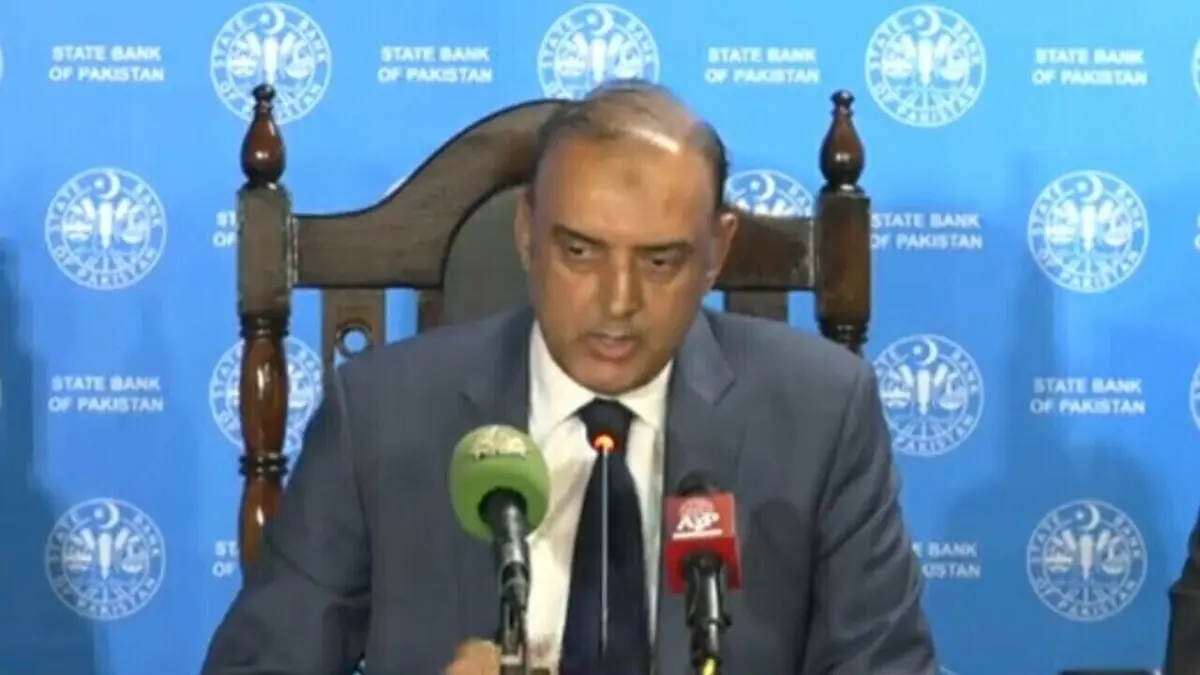
KARACHI: Governor State Bank of Pakistan (SBP) Jameel Ahmad on Friday expressed confidence that Pakistan’s economic fundamentals have stabilized and will continue to further improve over the next two years, backed by what he described as sustainable and disciplined policy measures adopted by the SBP.
Speaking during an interaction with media representatives at the SBP head office, outlining the SBP’s policy priorities, the governor SBP said the State Bank’s first objective was price stability, followed by ensuring a sound banking system and then supporting economic growth.
He said the first two objectives had largely been achieved, with inflation brought under control and banking standards aligned with international benchmarks. “With these foundations in place, the SBP is now focusing on promoting sustainable economic growth,” he added.
“Overall, Pakistan’s economy is on a more stable footing, with prudent policies, improving confidence, and a clearer path toward sustainable growth. Accordingly, GDP growth, estimated up to 4.75 percent in FY26, is expected to strengthen further in the following fiscal year”, he added.
Commenting on Pakistan’s engagement with the International Monetary Fund (MF), the governor SBP said the decision regarding any new IMF programme would be taken after the completion of the ongoing programme.
However, he added that if economic policies were implemented prudently and reforms continued, there might be no need for another programme.
On the transformation of the banking system from conventional to Islamic banking, Jameel Ahmed said efforts were under way to achieve the set targets, but stressed the need for issuing more sukuks to provide banks with adequate investment avenues.
He said the government and the SBP were already working on new sukuk issuances, adding that the overall share of Islamic banking in the financial system had gradually increased to around 25 percent.
He informed that with the monetary measurers inflationary pressures and the current account deficit were no longer major concerns, while the balance of payments position was expected to remain comfortable by the end of the current fiscal year (FY26).
“We have learned from past practices and previously we were compelled to take difficult but necessary decisions after the crisis,” he said. “Now we are moving forward with more cautious and sustainable measures aimed at delivering lasting results.”
The governor SBP noted that imports are rising in line with growing economic and industrial activity, but emphasized that the current account deficit remained well under control. SBP has set current account deficit of 0 to 1 percent of GDP, however, governor expressed confidence that it could settle around 0.5 percent of GDP.
On the external front, he said exports were initially projected to decline by around 6 percent, but recent policy measures announced by the prime minister were expected to reverse the trend.
Jameel Ahmed said relief measures, including a lower Export Finance Rate and a reduction in power tariffs, were likely to support export growth, particularly rice exports, which had witnessed a sharp decline. He noted that non-food exports had already increased by 5 percent.
“Pakistan’s banking sector is among the most stable sectors of the economy. Asset quality is sound and the system is resilient,” he said, adding that the SBP was now shifting greater focus toward economic growth.
On the soundness of the banking sector, Governor SBP said five to six banks previously faced capital adequacy challenges, but stressed that no bank currently falls short of capital requirements. He said the banking system remains sound and stable.
The governor SBP said growing confidence in Pakistan’s financial system was reflected in interest shown by banks from several countries that have approached the authorities to start operations in Pakistan. However, he didn’t disclose the name of the banks.
He pointed to a substantial increase in SME lending, which target has set around Rs100 billion expansion annually. Outstanding SME financing stood at Rs550 billion a year earlier, with a target to nearly double (Rs 1.1 trillion) the portfolio by 2029.
However, governor SBP mentioned that banks have shown strong performance, and by the end of 2025, SME loans portfolio reached Rs693 billion, reflecting an increase of around Rs150 billion in a year.
He believed that a lower policy rate would further support credit expansion to the SME sector.
On fiscal matters, he said government’s fiscal account has improved and the fiscal deficit expected to remain around 4 percent of GDP.
He also dismissed the perception that the SBP is controlling or managing the exchange rate, pointing instead to structural reforms in the foreign exchange market, including a major cleanup of exchange companies involved in malpractices. From 166 exchange companies in A and B categories, only 26 now remain.
In addition, 12 banks are now operating exchange companies. “The message is clear. There will be no more relaxation,” he said.
To enhance transparency in the foreign exchange market, a new monitoring system has been introduced to track every transaction.
He said he personally monitors the FX market on a daily basis and issues directives whenever required. Banks, he added, have been clearly instructed that trade-based money laundering will not be tolerated, citing the solar panel import episode as an important lesson for strengthening oversight.
Jameel Ahmed said policy measures taken by the SBP have helped to achieve four key targets: strengthening the regulatory framework, reforming exchange companies, curbing smuggling, and resolving issues faced by the business community.
Talking about the interest payment concerns, the governor SBP said there was a misconception that policy rate cuts alone could significantly reduce the government’s interest burden. Actually, SBP earned high profit through the higher interest rate and major part of this profit transferred to government of Pakistan.
Last year SBP transferred some Rs 2.4 trillion to the federal government on account of profit. He noted that out of an estimated Rs 8.2 trillion budget estimates for interest payment, with lower policy rate around Rs 7 trillion would go toward interest payments this fiscal year. Consequently, the SBP profits is expected to decline this fiscal year.
On digitalization, the Jameel Ahmed said the SBP was actively promoting a digital economy through Raast, the instant payment system.
Raast transactions have reached 7 to 8 million, marking a 44 percent increase, and are expected to grow further this year. He said the target was to bring two million merchants into the digital payments net by the end of the fiscal year.
“Raast achieved Rs1 trillion transactions target in the first year, while now that volume is being reached within days,” he informed.
He said Pakistan has repaid around $6 billion in external debt so far during this fiscal year and is scheduled to pay another USD4 to USD4.5 billion in the remaining period of this fiscal year, while the country’s foreign exchange position continues to strengthen despite massive debt servicing during the current fiscal year.
The governor SBP said foreign exchange reserves had increased even in a challenging inflow environment, adding that higher inflows were expected to receive in the second half of this fiscal year, which would further support the external account and forex reserves.
“There are no longer any restrictions on imports or letters of credit. Earlier, LC premiums were as high as 10 percent, but they have now come down to around 1 to 3 percent,” he said.
Responding to questions on cryptocurrency, the governor SBP said the government has already setup a council for the cryptocurrency and it is working for a sound regulatory framework.
On remittances, he said the outlook remained positive, with inflows expected to reach around $42 billion. In addition, State Bank is working to reduce remittance costs through IT-based solutions, and the framework would be finalized before the upcoming federal budget.
In addition, SBP is working with some countries for a fast and digital home remittances transaction.
Overall, the governor SBP said improving external indicators, easing trade financing conditions, and a stable banking system were strengthening confidence in the economy and supporting a more sustainable outlook.
Copyright Business Recorder, 2026